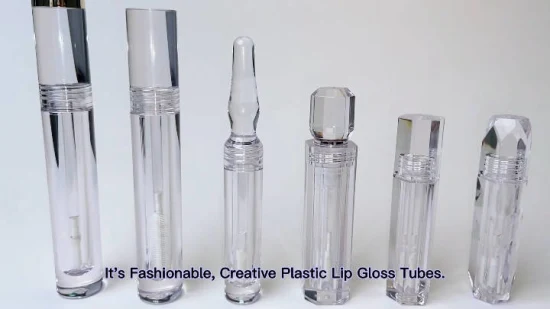
Custom Lip Gloss Tubes: Wholesale Buyer Guide
Finding the right packaging supplier is especially important for lip gloss products. A container may look correct in a catalog but still leak, dispense too much formula, scratch during transport, or perform poorly on the filling line.
Wholesale buyers should therefore evaluate suppliers on technical support, component compatibility, sample development, quality control, and production reliability rather than price alone.
The strongest supplier is one that can translate a product brief into a complete packaging specification and reproduce that specification consistently across repeat orders.
Prepare a Detailed Product Brief
Before contacting suppliers, define the main packaging requirements.
The brief should include:
- Formula type and viscosity
- Fill volume
- Preferred container shape
- Applicator type
- Target customer
- Decoration requirements
- Order quantity
- Target price range
- Filling location
- Launch date
Providing this information reduces quotation errors and allows suppliers to recommend realistic options.
A buyer requesting only “a 5 ml luxury lip gloss tube” may receive several visually attractive suggestions that are unsuitable for the formula or filling process.
Review the Supplier’s Product Range
A supplier with a broad range of standard molds can often help brands customize packaging without paying for completely new tooling.
Review whether the supplier offers different bottle shapes, capacities, caps, wipers, stems, and applicator tips. A wider component library makes it easier to adjust the package during development.
Buyers should also ask whether components are produced in-house or purchased from external factories. Outsourcing is not necessarily a problem, but the supplier should have clear controls for incoming materials, component consistency, and assembly.
Evaluate Applicator and Wiper Expertise
The applicator and wiper should be treated as technical components rather than decorative accessories.
A knowledgeable supplier should ask about formula viscosity and application preferences before recommending a doe-foot, brush, paddle, or silicone tip.
It should also provide wiper options with different internal openings. The best combination is normally identified through filled-product testing.
When reviewingASME lip gloss tubes, buyers should request complete sets that include the container, cap, stem, applicator, and wiper. Mixing untested components from different sources can lead to poor fit and leakage.
Compare Customization Capabilities
Customization may involve much more than logo printing.
Options can include:
- Custom body and cap colors
- Frosting
- Metallization
- Gradient spraying
- Silk-screen printing
- Hot stamping
- Labels
- Custom applicator shapes
- Exclusive molds
Buyers should ask which decoration processes are completed in-house and which are subcontracted. They should also confirm the number of colors, printable area, registration tolerance, and resistance to scratches or formula contact.
Physical samples are essential when color consistency or premium finishes are important.
Request Transparent Quotations
A useful quotation should identify the container material, capacity, applicator, decoration, MOQ, tooling charges, sample fees, packing method, lead time, and shipping terms.
The buyer should determine whether the price includes the complete assembled package. Some quotations may exclude the wiper, decoration, or individual protective packing.
Ask suppliers to separate one-time setup charges from repeat-order costs. This provides a clearer picture of the long-term unit price.
Check Quality-Control Procedures
Lip gloss packaging requires inspection at both component and assembly levels.
Typical checks include:
- Container dimensions
- Neck accuracy
- Cap fit
- Stem length
- Applicator attachment
- Wiper retention
- Cap torque
- Leakage resistance
- Decoration alignment
- Surface scratches
- Packing cleanliness
The supplier should explain its acceptable tolerances and inspection frequency. Buyers may also request production samples or a third-party inspection before shipment.
Evaluate Communication and Lead Times
Packaging development usually involves several rounds of questions and sample adjustments.
A capable supplier should keep clear records of materials, colors, decoration, component codes, and approved samples. Vague or inconsistent communication during sampling often indicates a higher risk during production.
The quoted timeline should include sample preparation, artwork approval, material procurement, manufacturing, decoration, assembly, inspection, and packing.
Confirm Scalability
Indie brands may begin with a moderate order but require larger quantities after a successful launch.
Ask whether the selected packaging can be produced at higher volumes, how repeat-order lead times are managed, and whether approved color standards and tooling will be retained.
A dependable supplier should support both the first launch and future product extensions.
Wholesale buyers can reduce risk by comparing suppliers against the same written specification. The best partner combines suitable components, technical guidance, stable quality, transparent pricing, and the ability to reproduce approved packaging consistently.