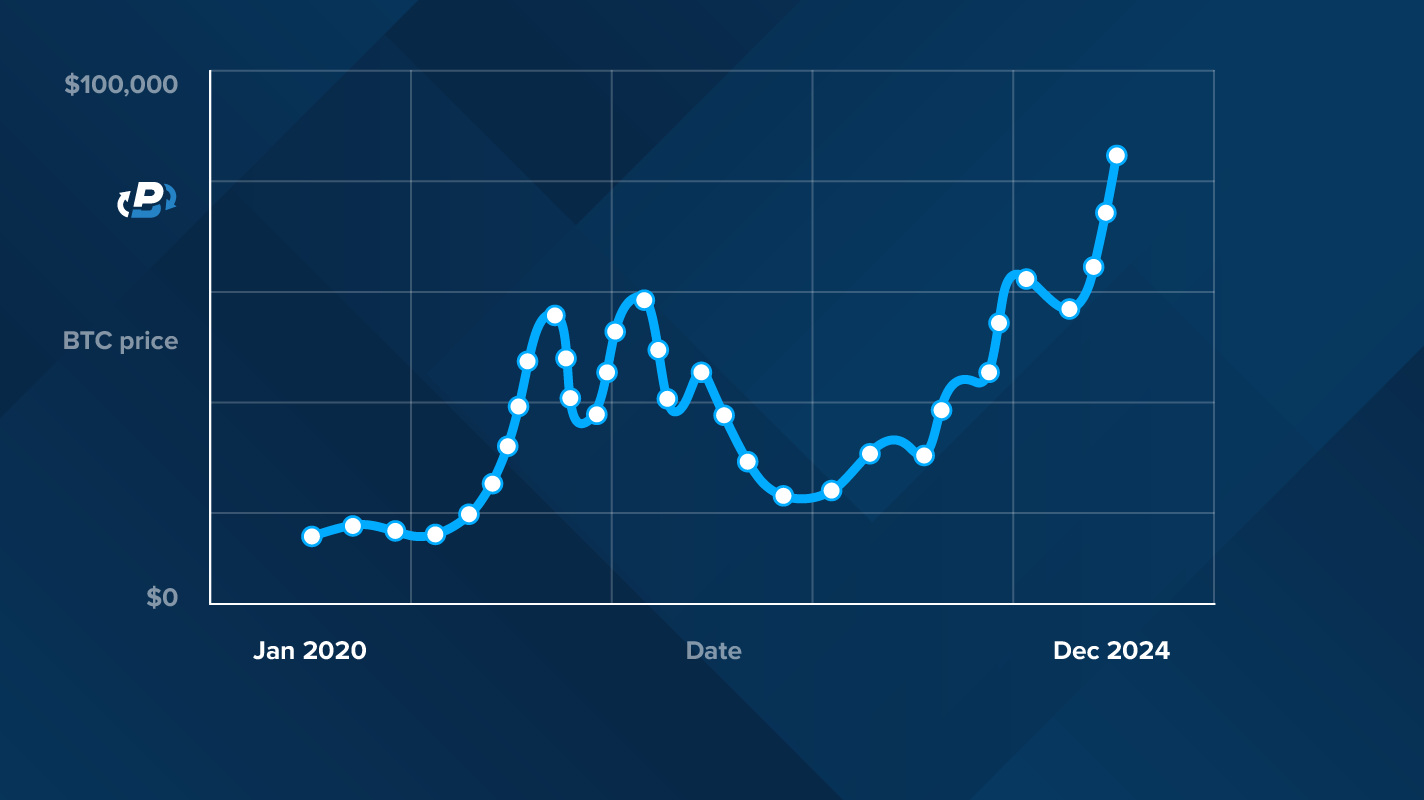
One of the most common questions among new Bitcoin investors is whether it’s better to invest a lump sum all at once or to spread purchases out over time using DCA. There’s no single right answer – it depends heavily on where in the market cycle you happen to enter – but each approach carries distinct trade-offs worth understanding.
A lump-sum purchase can, in theory, produce a higher return if the investor happens to buy in near a cyclical low, right before a sustained rally. The trouble is that such a low point is only obvious in hindsight, looking back at a chart after the fact. If the lump sum lands near a local peak instead, the investor could be sitting on losses for a long stretch before breaking even.
DCA approaches the problem differently. Rather than trying to guess the ideal entry point, it spreads risk across time. Some purchases will inevitably land at higher prices, others at lower ones, and the resulting average cost tends to land somewhere in the middle. This doesn’t maximize potential upside, but it meaningfully reduces the risk of buying in at precisely the worst possible moment.
To see the difference in concrete numbers, it helps to work with real historical data. The Bitcoin DCA Calculator lets you set a contribution amount, a frequency, and a date range, then shows exactly how a portfolio would have performed over that period – including average entry price, total return, and maximum drawdown. Comparing different historical windows makes it easy to see how DCA behaves during both bull runs and sharp corrections.
In practice, many individual investors land on a hybrid approach: putting a portion of their capital in immediately and spreading the rest across several months using DCA. This allows some participation in a potential near-term rally while still reducing timing risk for the remaining capital.
It’s worth keeping in mind that past performance doesn’t guarantee future results. Bitcoin remains a volatile asset, and any investment decision should be made thoughtfully rather than based solely on historical charts. This content is for informational purposes only and does not constitute investment advice.
Ultimately, the choice between lump sum and DCA often comes down to comfort with volatility. Investors who would lose sleep over a large purchase dropping in value shortly after buying tend to find DCA far easier to stick with over the long run, and consistency is usually what determines whether a strategy actually gets followed for years rather than abandoned after a few tough months.