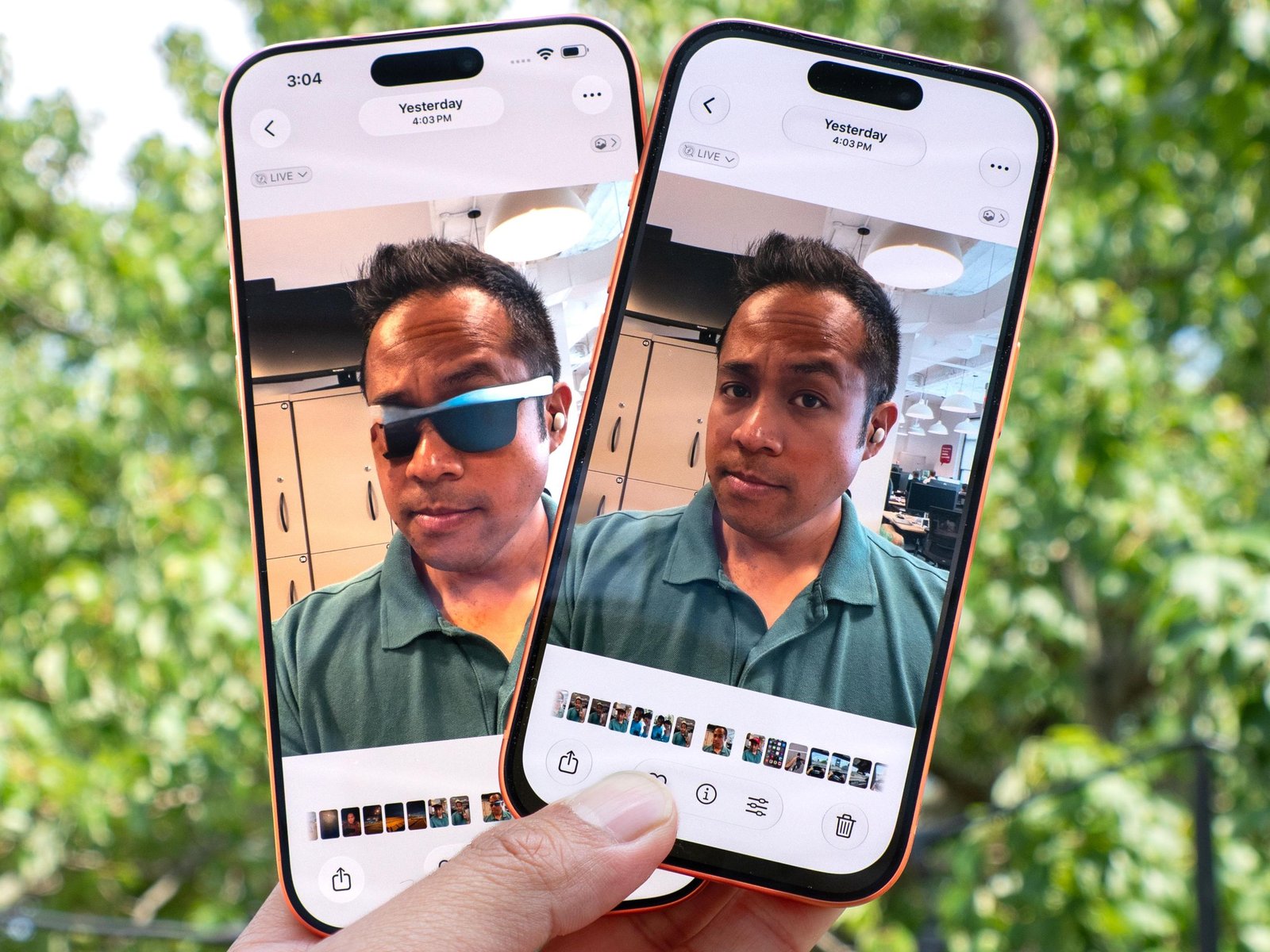
Artificial intelligence has changed photography faster than almost anyone expected.
Only a few years ago, editing a photograph required knowledge, patience, and professional software. Today, almost anyone can download an app, tap a single button, and watch an ordinary image transform into something brighter, sharper, and more colorful within seconds.
It’s fast.
It’s simple.
It’s impressive.
But there is one important question that many people never stop to ask.
If everyone can produce the same result with one click, who actually stands out?
This question is becoming increasingly important as AI-powered editing applications continue to dominate smartphones around the world.
From Instagram filters to AI portrait enhancers, automatic sky replacements, and facial retouching, editing has become more accessible than ever before.
Accessibility, however, is not the same thing as mastery.
The New Reality of Photography
Today, almost everyone carries a camera in their pocket.
Not just a camera—a remarkably capable one.
Modern smartphones can produce photographs that would have amazed professional photographers fifteen years ago.
Alongside these cameras come hundreds of editing applications.
Some are completely free.
Others offer premium subscriptions with dozens of AI-powered editing tools.
For many users, photography has become incredibly simple.
Take a picture.
Press “Enhance.”
Share it.
Repeat.
The entire process may take less than thirty seconds.
But if millions of people follow exactly the same workflow, the results inevitably begin to look alike.
When Everyone Uses the Same Button
Imagine that every musician in the world used exactly the same instrument with exactly the same settings.
Eventually, every song would begin to sound familiar.
Photography works the same way.
Artificial intelligence analyzes millions of existing photographs and generates edits based on patterns it has already learned.
It does not create a personal style.
It creates an average.
And averages rarely become memorable.
This is where the difference between convenience and professionalism becomes obvious.
Professional editing is not about making a photograph brighter.
It is about making a photograph unique.
The Numbers Tell an Interesting Story
There are now well over three billion smartphones in use around the world.
A significant percentage of their owners regularly photograph people, travel, food, pets, landscapes, and everyday life.
Now imagine a simplified breakdown.
Approximately 60% of active smartphone photographers rely almost entirely on one-click AI editing applications.
Another 25% use more advanced paid editing apps with additional filters and AI tools.
Around 10% occasionally work with professional photographers or receive professionally edited photographs.
That leaves only about 5% of people who actually invest time in learning professional editing from the ground up.
Whether those exact percentages vary is less important than the overall trend.
The overwhelming majority depend on automation.
Only a small minority develops real editing skills.
And when everyone uses automation, automation stops being a competitive advantage.
Standing Out Requires Something Different
Professional photographers often repeat the same idea.
People rarely remember photographs because they were perfectly exposed.
They remember them because they feel different.
Creating something different requires decision-making.
Every photograph presents unique challenges.
Different skin tones.
Different lighting.
Different weather.
Different emotions.
Different stories.
Artificial intelligence cannot fully understand intention.
It can only estimate what usually looks good.
That is an important distinction.
Good is not always memorable.
The Investment That Most People Avoid
According to Israeli photographer Stas Muzikov, whose comments about AI-assisted editing have been featured on Israel’s Channel 12 television, the biggest difference between professionals and hobbyists is not talent.
It is investment.
Not necessarily financial investment.
Time investment.
Many people spend two hours every evening trying different AI applications, comparing filters, exporting multiple versions, and searching for the perfect preset.
The next day they repeat exactly the same process.
The day after that, they do it again.
Weeks pass.
Months pass.
Yet they remain dependent on the software.
Stas Muzikov proposes a completely different approach.
Instead of spending two hours every day experimenting with AI applications, invest those same two hours into learning professional editing.
Do it consistently.
Do it for two months.
Study color.
Light.
Exposure.
Contrast.
Masking.
Selective adjustments.
Learn why each edit works rather than simply accepting whatever an algorithm suggests.
The investment is larger at the beginning.
But the long-term return is dramatically different.
Professional Knowledge Saves Time
At first glance, AI seems faster.
Press one button.
Wait a few seconds.
Finished.
But only until you discover that the result still isn’t exactly what you wanted.
So you try another preset.
Then another application.
Then another filter.
Eventually, a simple edit that should have taken five minutes has consumed half an hour—or even longer.
Professional editing works differently.
Once someone understands professional software such as Adobe Lightroom, editing becomes intentional rather than experimental.
Instead of guessing, the photographer knows exactly which adjustment is needed.
According to Stas Muzikov, after learning Lightroom properly, producing a fully professional result often takes approximately five minutes per photograph.
More importantly, the photographer remains in complete control.
Nothing is random.
Every decision is deliberate.
Why Lightroom Continues to Dominate
There are many professional editing programs available today.
Capture One.
ON1 Photo RAW.
DxO PhotoLab.
Luminar Neo.
Darktable.
Each has its strengths.
Yet Lightroom continues to be one of the most widely used professional editing platforms in the world.
There is a practical reason for that.
Popularity creates education.
Because millions of photographers use Lightroom, there are countless tutorials available on YouTube, online courses, discussion forums, and educational communities.
Learning becomes easier because answers already exist.
Every editing problem has probably been solved—and explained—by someone else.
That enormous educational ecosystem becomes almost as valuable as the software itself.
AI Is a Tool, Not a Replacement
None of this means artificial intelligence is useless.
Far from it.
AI can dramatically accelerate repetitive tasks.
It can remove distractions.
Reduce noise.
Select subjects.
Generate masks.
Organize image libraries.
Speed up workflow.
These are valuable improvements.
But there is a significant difference between using AI as an assistant and allowing AI to become the editor.
Professionals increasingly use artificial intelligence to eliminate repetitive work so they can spend more time making creative decisions.
The software handles mechanics.
The photographer handles vision.
Which Group Do You Want to Join?
Ultimately, the discussion is not really about software.
It is about positioning.
If almost everyone can achieve roughly the same automatic result with a single button, those results gradually become ordinary.
Standing out has always required something extra.
That extra has changed throughout history.
Better cameras.
Better lenses.
Better lighting.
Better composition.
Now it may simply be better editing knowledge.
The question is surprisingly simple.
Do you want to belong to the 95% who rely primarily on automatic tools?
Or do you want to become part of the 5% who understand exactly why every photograph looks the way it does?
Artificial intelligence is undoubtedly transforming photography, and its capabilities will continue to improve.
But today, the photographers who consistently create memorable work are still those who combine technology with knowledge rather than replacing knowledge with technology.
The button may become smarter.
But vision, experience, and artistic judgment remain impossible to download.